| Lesson 9 | Edit the table design by moving a field |
| Objective | Move a field in Datasheet and Design views in MS Access |
Move a Field in Datasheet View and Design View
As you refine a table, you may decide that the fields would be easier to work with in a different order. In Microsoft Access, you can reorder fields (columns) in two places:
- Datasheet View: reorders the display of columns while viewing data. This is ideal for quickly reorganizing what you see while entering or reviewing records.
- Design View: reorders the field definitions in the table schema. This affects the default field order when you open the table, and can influence the default order used by new forms/reports created later.
Move a field in Datasheet View
Use Datasheet View when you want to change column order while viewing data. This is a fast, visual reordering method. (In many Access environments, the column order is remembered for that table view, but it is still best to treat this as a layout preference rather than a structural change.)
- Open the table in Datasheet View.
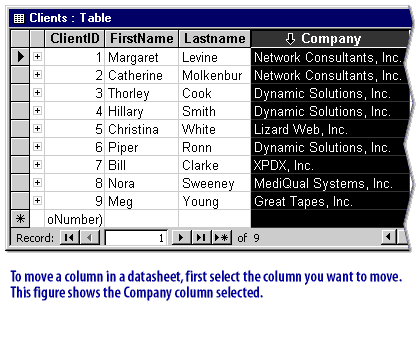
- Click the column header of the field you want to move to select the entire column.
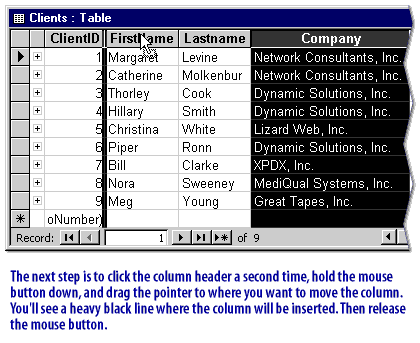
- Click and hold the selected column header, then drag left or right. A vertical insertion bar indicates where the column will be placed.
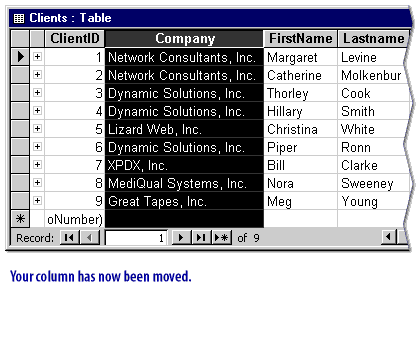
- Release the mouse button to drop the column in its new position.
- If Access prompts you to save layout changes (or if you want to be explicit), save the table/view. Closing and reopening the table is a quick way to verify the new order is retained in your environment.
Move a field in Design View
Use Design View when you want to reorder the field definitions in the table schema. This is the right choice when you want the table to open with a new default field order, or you want your design grid to match the logical flow of the data (for example: ID fields first, then name fields, then contact fields).
- In the Navigation Pane, right-click the table and choose Design View.
- Click the row selector (the gray box at the left of the field row) for the field you want to move. The entire field row should highlight.
- Click and drag the row selector up or down to the new position.
- Release the mouse button to drop the field row.
- Press Ctrl + S (or click Save) to save the table design changes.
Example: moving a column in a table
The following images demonstrate the basic drag-and-drop workflow for moving a field in Datasheet View.
Modern guidance and best practices
- Know what you are changing. Datasheet moves are typically a view/layout preference; Design View moves change the order of field definitions. If you need a durable default order for future objects, do the move in Design View.
- Watch for dependencies. Moving fields does not usually break queries, forms, or reports, but it can change the default column order when building new forms/reports or exporting data.
- Use a logical field order. A common convention is: primary key first, foreign keys next, then descriptive fields, then status/flags, then notes. This improves readability and reduces design mistakes.
Next, you will learn how to choose and define a primary key field.
Learn to choose and define a primary key field.