| Lesson 8 | Create an Access database from scratch |
| Objective | Create a blank Access database. |
Create an Access Database in Microsoft 365 (Modern Approach)
In Microsoft Access 2021 and Microsoft 365, creating a database has become faster, more flexible, and better integrated with the cloud. Whether you’re designing a new project tracking system, a client billing database, or a simple inventory manager, Access provides two main approaches: starting from a blank database or using a template that includes predefined tables, forms, and reports.
This lesson walks through both methods using the current Microsoft Access interface and conventions for 2025-no longer referring to .mdb files, but to the modern .accdb format.
Option 1: Create a Database from a Template
Access includes built-in templates designed for specific use cases such as Contact Management, Asset Tracking, or Project Management. These templates contain ready-made tables, queries, and forms to help you get started quickly.
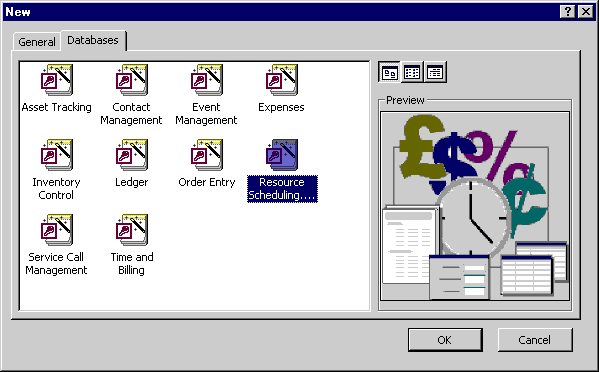
- Launch Access - Open Microsoft Access from the Start Menu or Microsoft 365 Apps dashboard.
- Select a Template - On the start screen, choose a template such as Contacts, Tasks, or Students. Each template shows a short description of what it includes.
- Name the Database - Enter a file name and specify a location. You can save to OneDrive, SharePoint, or a local folder.
- Click “Create” - Access builds the database automatically and opens it with preloaded sample data (which you can remove).
- Customize - Modify tables, rename fields, or add forms and reports to meet your project needs.
Templates are ideal when you need a quick start and don’t want to design every component from scratch. Each template can also be fully customized, allowing you to add relationships, create lookup fields, or connect to other data sources such as Excel or SQL Server.
Option 2: Create a Blank Database from Scratch
For greater control over design, you can start with a blank database. This approach is recommended when you’re building a fully custom data model or migrating data from another system.
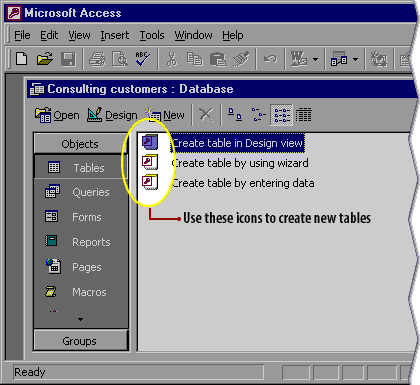
- Open Access and choose Blank Database from the start screen.
- Enter a File Name - Access saves the new file as .accdb by default.
- Click Create - Access opens a new, empty table in Datasheet view.
- Define Fields - Rename the default
IDfield (which is an AutoNumber primary key by default) and add new fields using the + Add Field column header. - Save and Name the Table - Press Ctrl + S or click the save icon to assign a descriptive table name (e.g.,
CustomersorInvoices). - Switch to Design View for advanced configuration such as data types, field sizes, and validation rules.
After defining your first table, you can create additional tables and set up relationships between them through the Database Tools → Relationships tab. Establish primary and foreign keys to enforce referential integrity, ensuring that your data remains consistent and reliable.
Integrating Modern Features
Modern Access offers several enhancements compared to legacy versions:
- Linked Data Sources: Connect directly to SQL Server, Azure SQL Database, or SharePoint Lists for hybrid solutions.
- Dataverse Integration: Publish Access data to Microsoft Dataverse for Power Apps, enabling web and mobile front ends.
- Cloud Storage: Save your .accdb files directly to OneDrive or SharePoint for collaboration and version history.
- Modern UI: Use the Table Design and Relationships panes with drag-and-drop functionality for faster schema creation.
Summary
Creating a database in Access no longer means starting from scratch in a vacuum. With Microsoft 365 templates, cloud storage, and connections to enterprise data services, Access continues to provide a fast and approachable way to design relational databases for both small businesses and corporate environments.
Exercise: Create a Database for Your Project
For hands-on practice, create a new blank database and design at least one table for your course project. Include an AutoNumber primary key, define appropriate data types, and save the table. In the next lesson, you’ll learn how to create relationships and enforce data integrity across multiple tables.
Create Access Database from Scratch - Exercise
Create Access Database from Scratch - Exercise